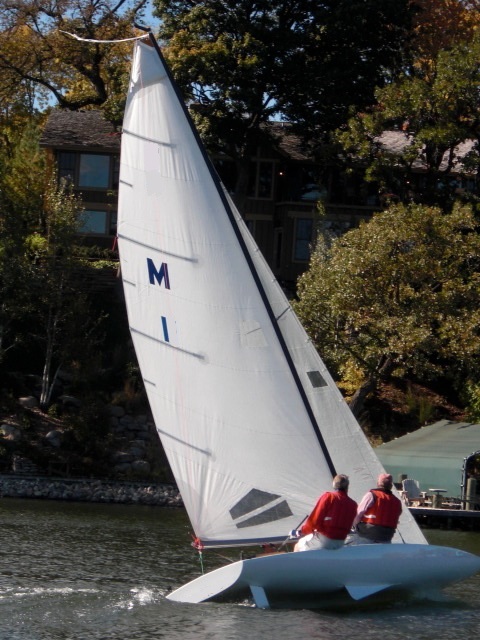
My father, Del Cook, introduced me to sailing in 1955. I was 11. We built a small plywood boat together and I sailed it on a lake in southeastern Wisconsin — I loved the “little blue boat” but it couldn't point upwind. Two years later, at 13, I was licensed as a novice ham radio operator and later General class, building my first transmitter under the guidance of a patient mentor. Both of these threads — sailing and radio — would later prove to come together in my life. Through the 1960s, 1970s and into the '80s I sailed extensively, crewing and racing. I taught sailing at the Purdue University sailing club and for the US Navy on San Francisco Bay. I bought my first boat (a Melges 16 ft “M scow”) in 1974 and sailed in regattas around the Midwest. Through the late 1970s and early 1980s I crewed on 30–40 foot sailboats on Lake Michigan and in the Bahamas. In 1982 I moved from Indiana to Naples, in southwest Florida, to be close to the Caribbean and be able to sail year-round. I crewed on 30-40 ft boats in club races, all together proving to be the apprenticeship that, in 1985, enabled me to turn sailing from an avocation into my vocation and to be paid for sailing!
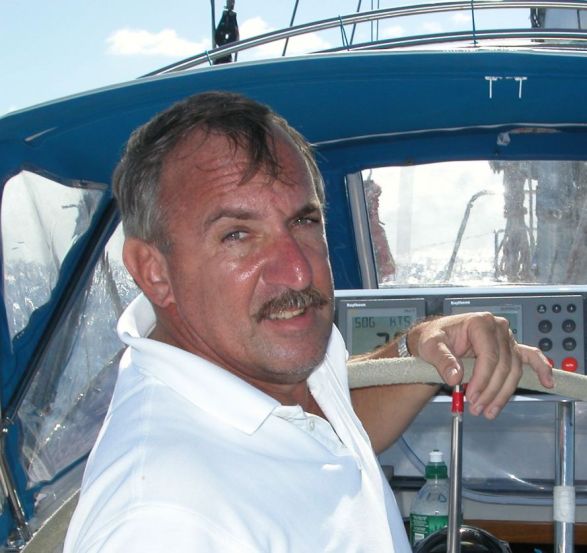
In 1985 I bought my first coastal and offshore capable sailboat, a 1979 Tartan 37, “Blue Yonder”. That same year I qualified for and earned my USCG 100-ton Master's license, became an ASA Advanced Coastal Cruising Instructor, and formed my company, Ocean-Pro Offshore Yacht Deliveries. Over the next 20 years I developed an “Instructional Delivery” sail training program, delivering sail and motor yachts from 35-100 ft LOA on real-world coastal and offshore passages throughout Florida, the US East Coast from Maine to Texas, and internationally to the Bahamas, Cuba, Mexico, and the Caribbean. From there I went on to longer instructional delivery passages to all the Central American countries, to northern South America (Colombia and Venezuela), to Bermuda, and across the Atlantic to Western Europe. In all, over 20 years at sea I logged more than 150,000 nautical miles as Captain and instructor, and trained more than 500 sailors to be offshore capable on hundreds of extended passages. Two of my students went on to complete world circumnavigations: Larry Jacobson on SV Julia, a Stephens 50, did it in 6 years; and David Pollitt, on SV Shearwater, a 47 ft catamaran, did it solo in 3 years. Those years for me also included a transatlantic race in 1987, finishing 3rd, and surviving Hurricane Andrew with 150 mph winds in 1992. Sailing those miles in the open ocean taught my crews and me, firsthand, the value of preparation and real-time weather observation, integrating the barometer, wind, and forecast data, first by HF SSB voice, text and weather-fax, and then in 1991 by SCS Pactor II and GRIB files, and later by Iridium and Starlink. All of this, learned the hard way at sea, built the practical weather and passage-making judgment behind my present expertise.
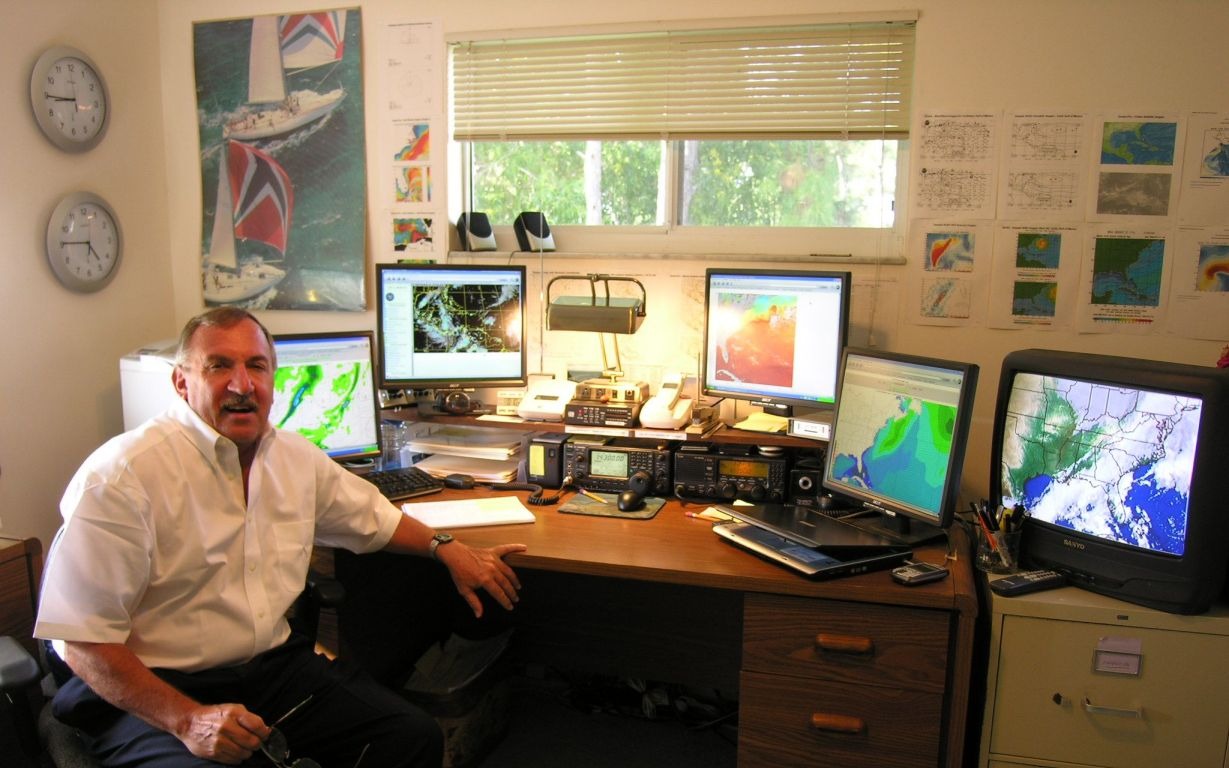
In 2005 I converted my offshore “instructional delivery” program into a shore-based weather forecasting and routing consulting business. I earned an FCC Private Marine Coast Station license (“Ocean-Pro Weather”) and equipped the office with HF SSB gear for the marine frequencies. For more than 20 years since then, I've worked as a professional weather router from my South Florida home office. Today I'm the same person who trained 500 offshore sailors — now your trusted advisor, reviewing your forecast every day of your entire passage — providing custom forecasting, passage planning, and open-ocean routing to the owners and captains of private yachts worldwide. I've now provided weather and routing for more than 1,000 clients aboard power and sailing yachts from 30-200 ft LOA (mono & multi-hull, about 75% sail and 25% power) making extended open-ocean passages in the Atlantic, Pacific, and Indian Oceans, many of which are documented vessel by vessel in the “Our clients' yachts” gallery. Most engagements are for offshore or ocean passages of 1,000 to 5,000 nm, typically 5-30 days, though we've also supported 10,000 to 40,000 nm multi-ocean, multi-month passages and multi-year global circumnavigations.
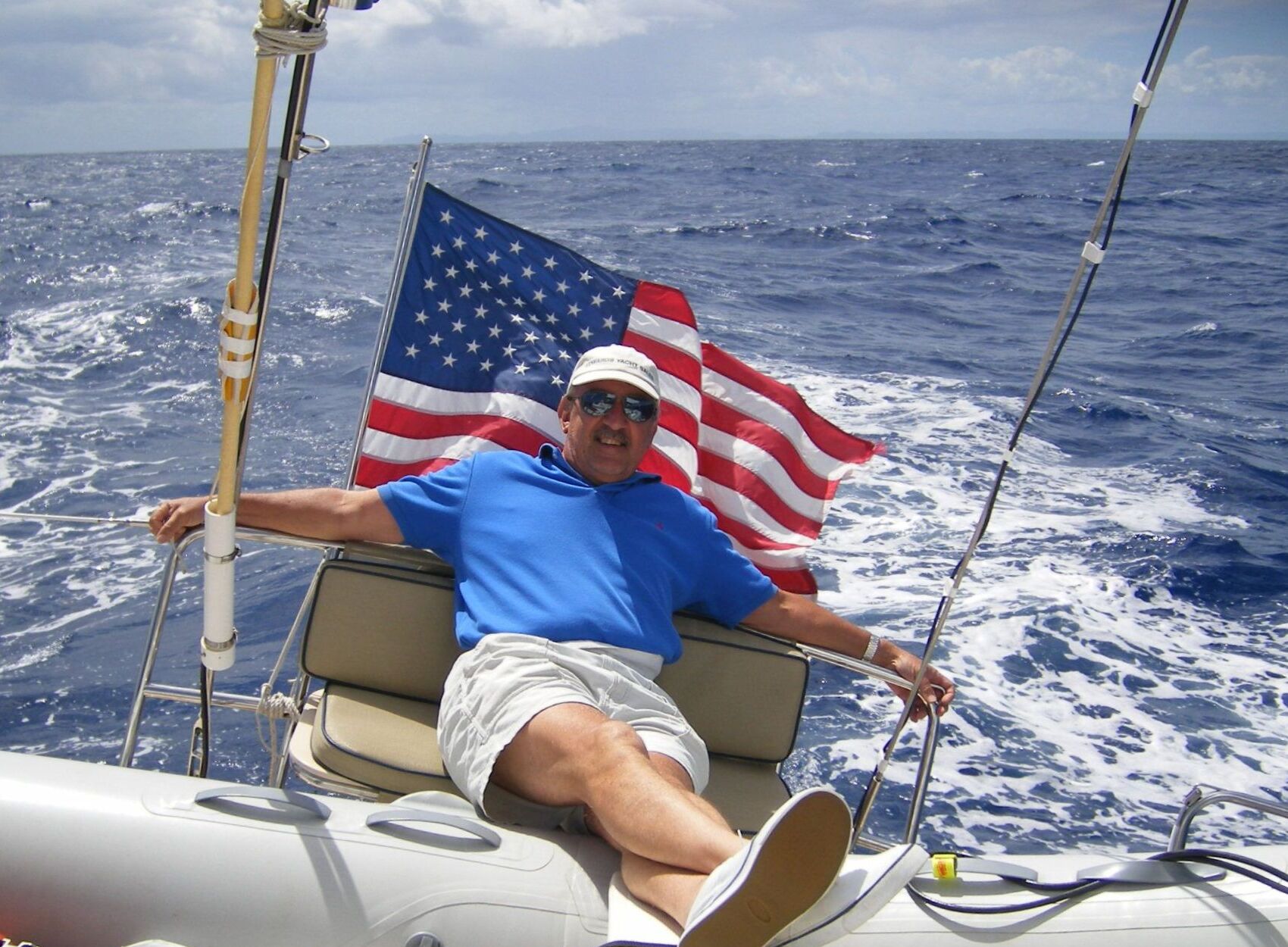
Underlying both careers — 20 years and 150,000 nm at sea, and 20 years of professional weather routing for yachts globally — has been four decades of continuous education in yacht handling, navigation, communications, weather, sea-state forecasting, and route planning. I've supplemented sea time and direct observation of vessel behavior, clouds, wind, seas, and barometric trends with an extensive library of reading and online resources, including Jimmy Cornell's World Cruising Routes, David Burch's Modern Marine Weather, Frank Singleton's Weather Handbook, Alan Watts' The Weather Handbook, Peter Bruce's Heavy Weather Sailing, Steve Dashew's Mariner's Weather Handbook, and standard references like Chapman Piloting & Seamanship and Nigel Calder's manuals. The ASA Marine Weather course, Starpath School of Navigation and Chris Bedford and Peter Isler's Marine Weather University courses, are also all excellent. All the computer models and resources I have used at sea are the same models, resources, and routing software listed on our Resources page, and are the very ones I use today to advise our clients globally.
Ocean-Pro Weather & Routing is proud to be a supporting sponsor of several world cruising organizations, including the Seven Seas Cruising Association, Noonsite, Latitude 38's Pacific Puddle Jump, and Sailblogs.